The proper functioning of the cooling system is especially relevant in summer. The failure of this critically important component in a car is associated with many troubles. Today, I want to talk about how I changed the thermostat on a Subaru Legacy, why I changed it, and what symptoms it had. We already have an article on the website about how I changed the antifreeze on the aforementioned car, which you can see here.
This car is used daily, and observing its symptoms is, of course, necessary not only for older cars but for cars of any year or type. I pay quite a lot of attention to the cooling system because when you attend to it in time, its maintenance is cheaper, and the engine is better protected. With this in mind, I bought a thermostat on the local market last year, but unfortunately, it was not an original, and its flaws became apparent quite soon. Often, a cooling system malfunction is associated with the system overheating, but in my case, it turned out to be something completely different.
The thing is, while driving on the highway, I noticed that on a slight descent, moving at about 70-100 km/h, the temperature gauge would drop quite low. This is, of course, difficult to notice when the car doesn't have a temperature gauge and only turns on a light when the engine is very overheated or cold, but in my case, I saw it clearly. Of course, I decided to fix this because the engine cooling down while driving has its own downsides and problems:
Increased fuel consumption: Because the engine cools down, the engine computer thinks the engine needs to warm up, so it injects more fuel into the combustion chamber to raise the engine temperature, which results in increased consumption.
Engine wear: Because the engine cools down while driving on the highway, and then we immediately take it to high RPMs, this causes engine wear. The oil in the cooled engine is also cooled and cannot properly lubricate and protect the moving parts.
Ineffective cabin heating: This reason is less relevant in summer but immediately noticeable with the onset of winter. A cold engine definitely cannot heat the cabin effectively.
But what was the cause? According to my observations, the thermostat's performance was quite effective in any situation except when moving downhill on the highway without a load. I easily explained this by the fact that the non-original thermostat had an insufficiently strong spring. The constant water circulation pressure managed to bypass it while driving on the highway, leaving the thermostat slightly open, which, of course, caused the engine to cool down.
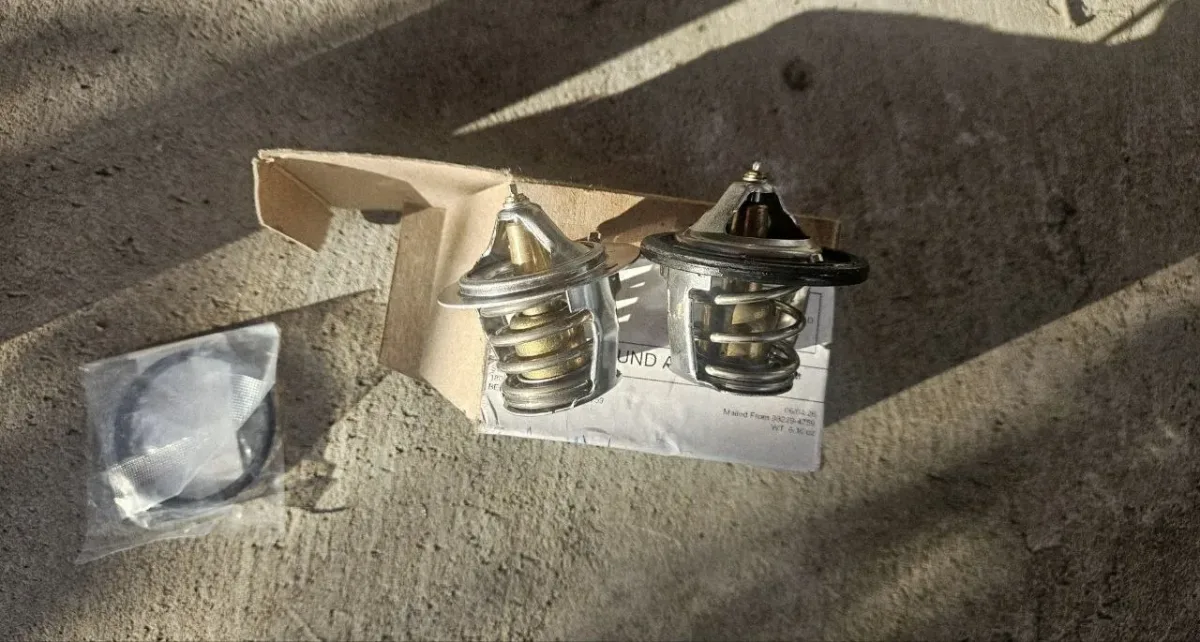
Because of this, I decided to show you the difference between the original and non-original thermostat, which you will also see in the photo. As seen in the pictures, the original thermostat has a firmer and more perfect spring, and this is exactly so that the temperature is firmly maintained. For the majority of Subaru engines—mostly models from 2000 to 2015—this exact 78-degree thermostat is used. You can purchase it on various platforms at different prices, averaging between 25 and 35 dollars. It is important to check the seller's rating before buying and ensure the seller is indeed selling original parts, as replicas are common. I bought this specific thermostat for 32 dollars on eBay.
The replacement process is similar to the antifreeze replacement process. Some Subaru radiators have a fluid drain bolt that is easily noticeable in the far left or right corner of the radiator, but in my case, draining the fluid is done directly by disconnecting the hose. In this instance, however, I will directly remove the 2 bolts that allow the thermostat housing to be removed.
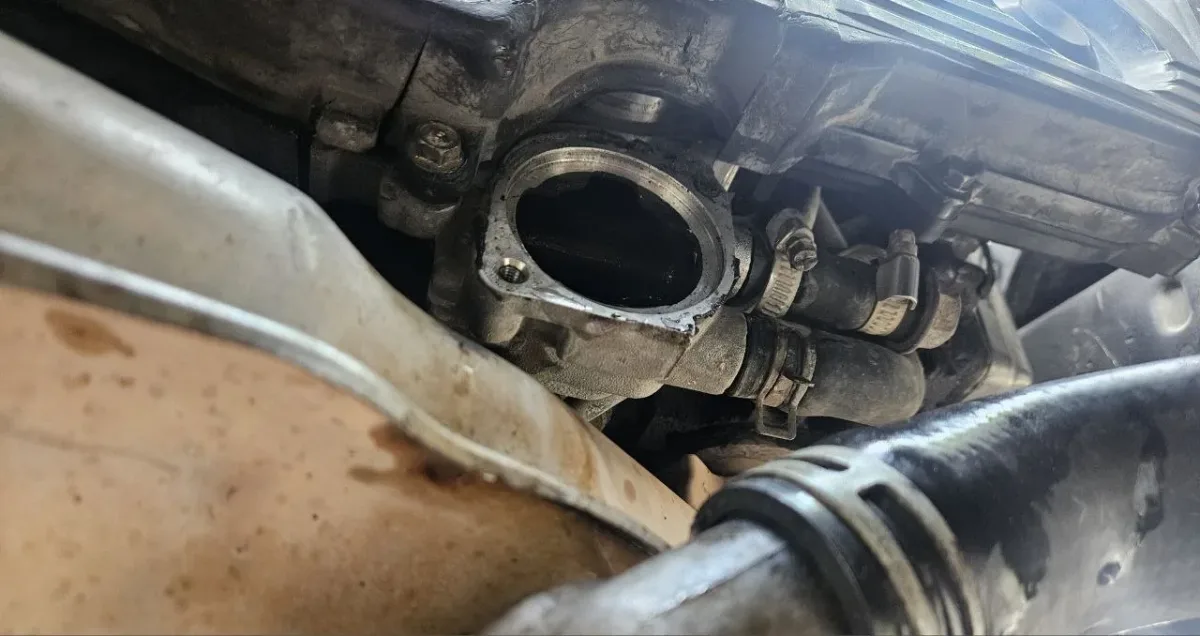
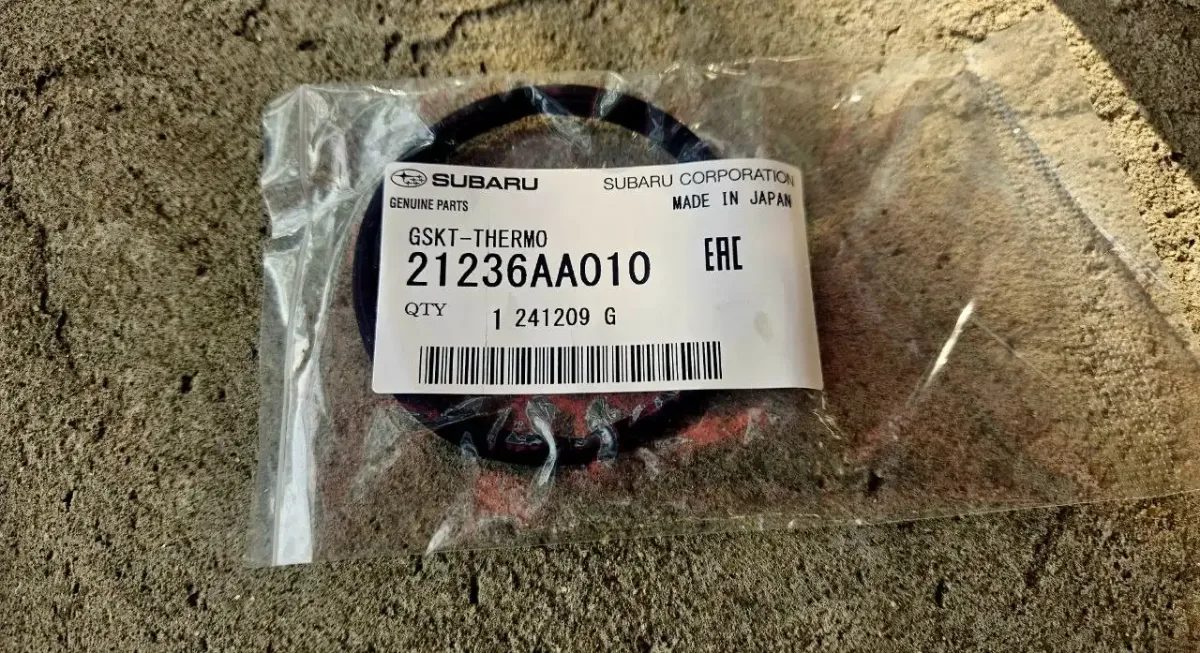
To do this, we need to jack up the left side of the car, place a jack stand for safety, and from underneath, easily remove the housing with a 10-millimeter wrench or socket. It is quite easy to access and also easy to remove. Then we take out the old thermostat. The new thermostat also came with its own gasket that attaches to it. We don't need anything else, except to pour in new antifreeze and thoroughly clean the installation area before directly installing the new thermostat.
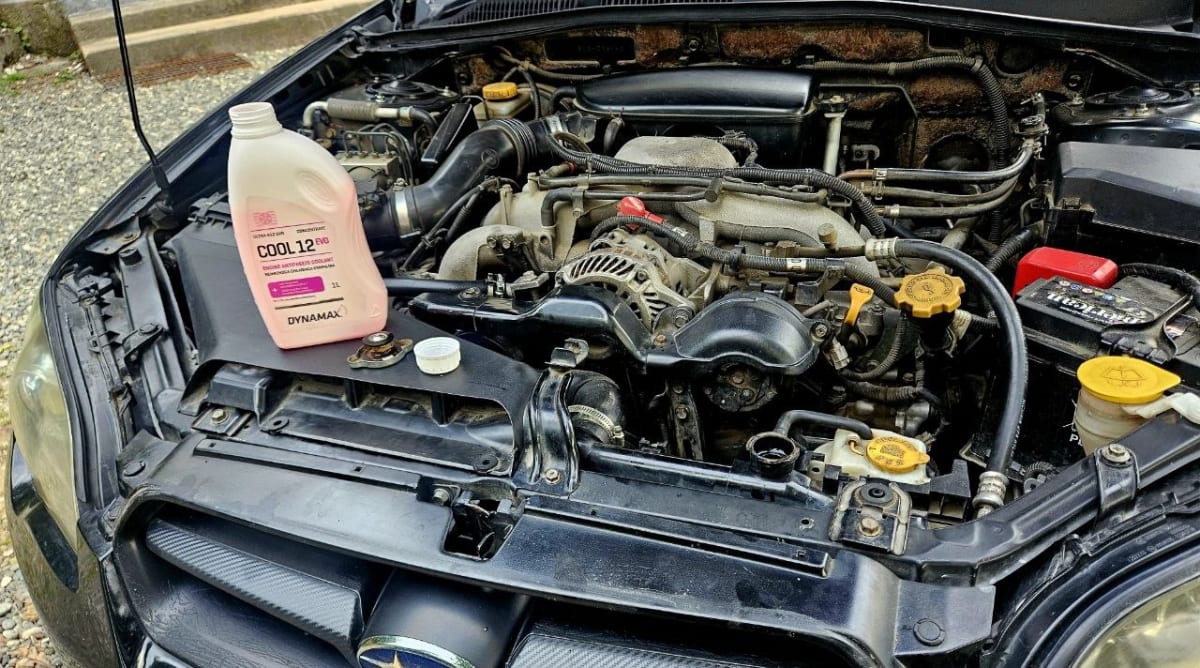
After installation, it is, of course, important to bleed the system because it was emptied of fluid. After taking it for a test drive, the result was truly pleasing. The original thermostat maintains the engine's operating temperature, helps the engine warm up quickly when started cold, and also retains the coolant's heat if parked for 2-3 hours. As a result, the engine no longer needs a long warm-up process. The final outcome? Lower fuel consumption, safer driving, and a more immediate effect when stepping on the accelerator.