
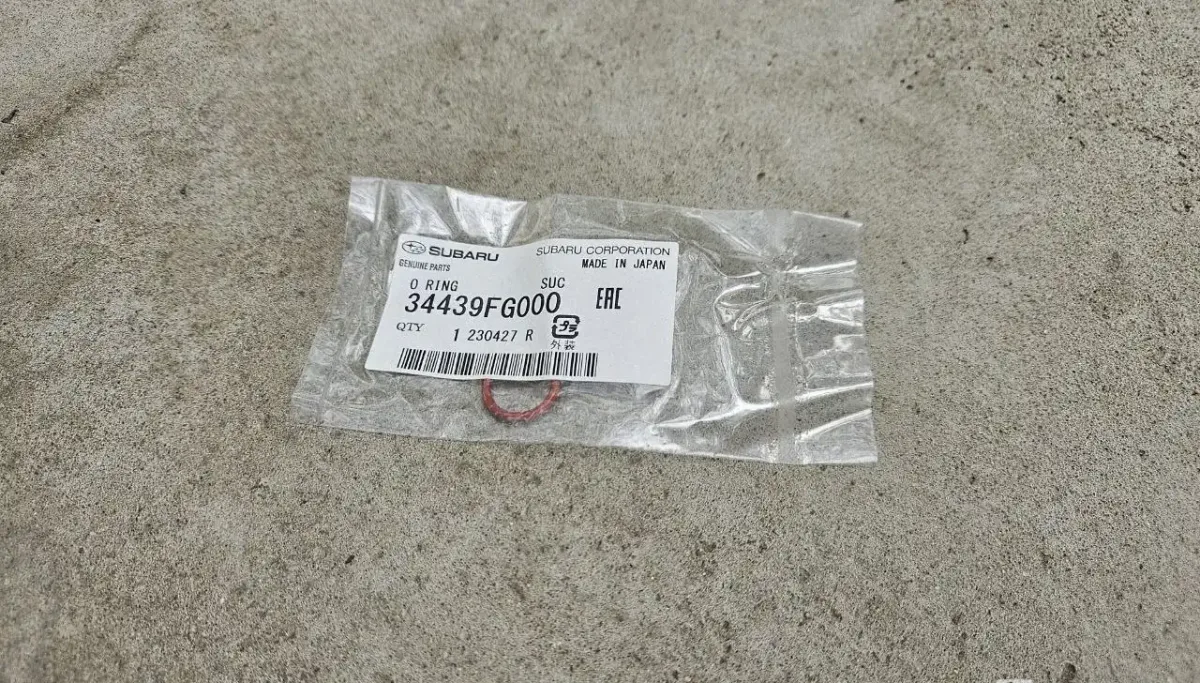
From the 90s for a whole decade the majority of cars used a traditional oil pump as a hydraulic system which creates pressure, the engine turns the pump with a belt and this hydraulic system turns the front tires, this quite simple structure and starting system over time created a big problem, due to the fact that pressure is created time does its thing and very often we encountered oil leaks from the system and the typical sound of the pump, exactly this weak point is in the 2003-2009 Subaru Legacy too, but not only, on almost all models of these years you would meet a similar problem, and often all this happens for a quite simple and cheap reason, specifically the unpleasant sound of the pump and sometimes a stiffened steering wheel too. Today I want to talk about how to easily solve this problem specifically and where to buy the mentioned part, this is the round gasket connecting the pump's upper hose, over time the heat and constant load damage this rubber gasket, it dries out and cracks because of which hermeticity is broken and air enters the system this especially happens when we directly start turning, and especially in a stopped position, when the load on the system increases, the pump immediately starts sucking in air right from this connection place, how to solve this problem? In home conditions to solve this problem just a few tools are needed, this is a 12 millimeter wrench or socket and of course the part itself. And you will meet this part on more than one platform, eBay America Europe or the Chinese market, prices differ and you will be able to easily select your desired option, it is interesting that Subaru released this specific O-ring in 2 versions, the old traditional gasket of black color and a more improved version with red coloring.
Differences and Correct Selection
Subaru used this black colored O-ring during the production of these models however, with the passage of time this O-ring was found to have a problem especially in turbo models, originating from the fact that generally a turbocharged car is hotter, this O-ring soon and easily stopped functioning, it went bad which subsequently caused the breaking of the vacuum of the hydraulic system, and then they released an improved version of red coloring which was directly created for hotter engines, and today often when selecting in the catalog you will see that the red colored model is for turbo engines but this is not so, despite the difference in the catalog in reality both O-rings are of the exact same size shape and function but in durability the new improved version is better exactly with the red coloring, exactly because of this I advise you to stop your choice exactly on the latter, I was able to purchase it on the Taobao Chinese market but original from the Japanese manufacturer, and the price was acceptable 5 dollars, and you will find exactly the same part on eBay more expensive so I made the choice exactly on the Chinese market. The part code is 34439FG000, always check the seller's reviews and make sure that he sells original parts, unoriginal and low-quality parts of these are frequent on the market.
The Hidden Danger of Leaking Oil
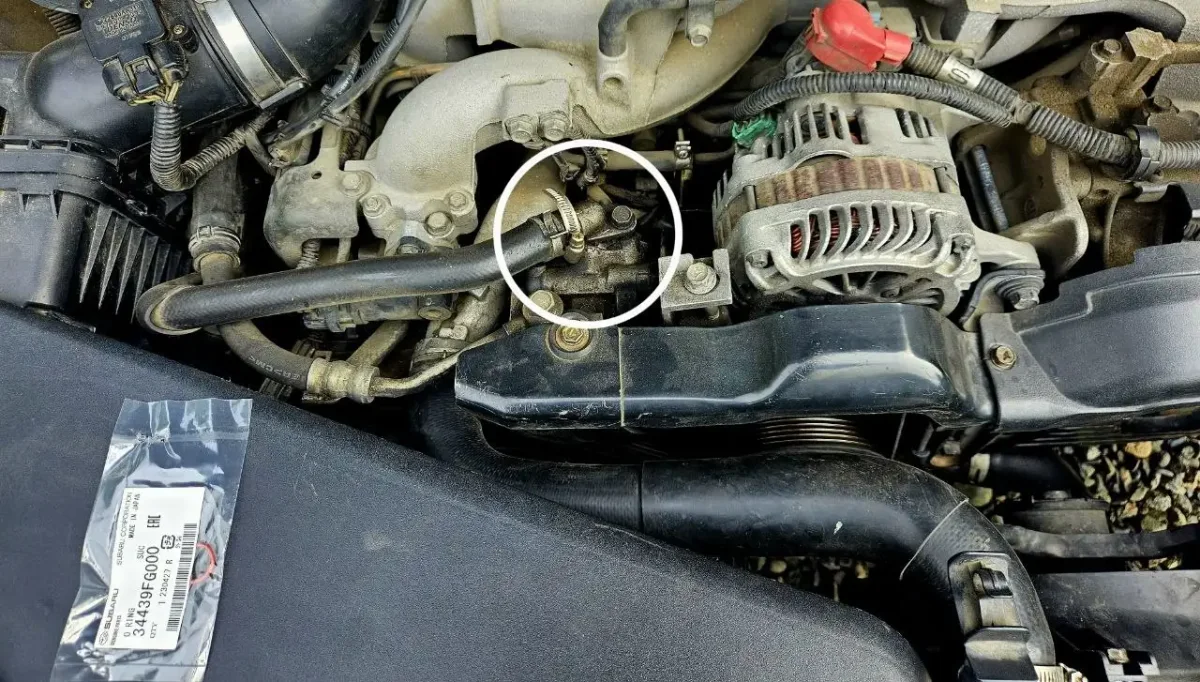
My car really didn't have a direct hydraulic problem but the sound was really bothering me, despite the fact that the steering wheel is quite soft, perceiving this sound on every turn feels like it gives the engine a bigger load too, but this is not the main problem, the problem hides in the design itself and in the fact that the penetration of air can also mean oil leaking from this point, and this hose connection point existing on the upper side of the pump can be alarming when oil comes out and spills down onto the engine, the engine design is arranged so that the pump is installed exactly above the engine's timing belt, and the leaked oil might get exactly on this timing belt which will cause its damage and in the worst case snapping which will immediately damage the engine, exactly for the purpose of preventing this I decided to do the latter.
How to Replace the O-Ring
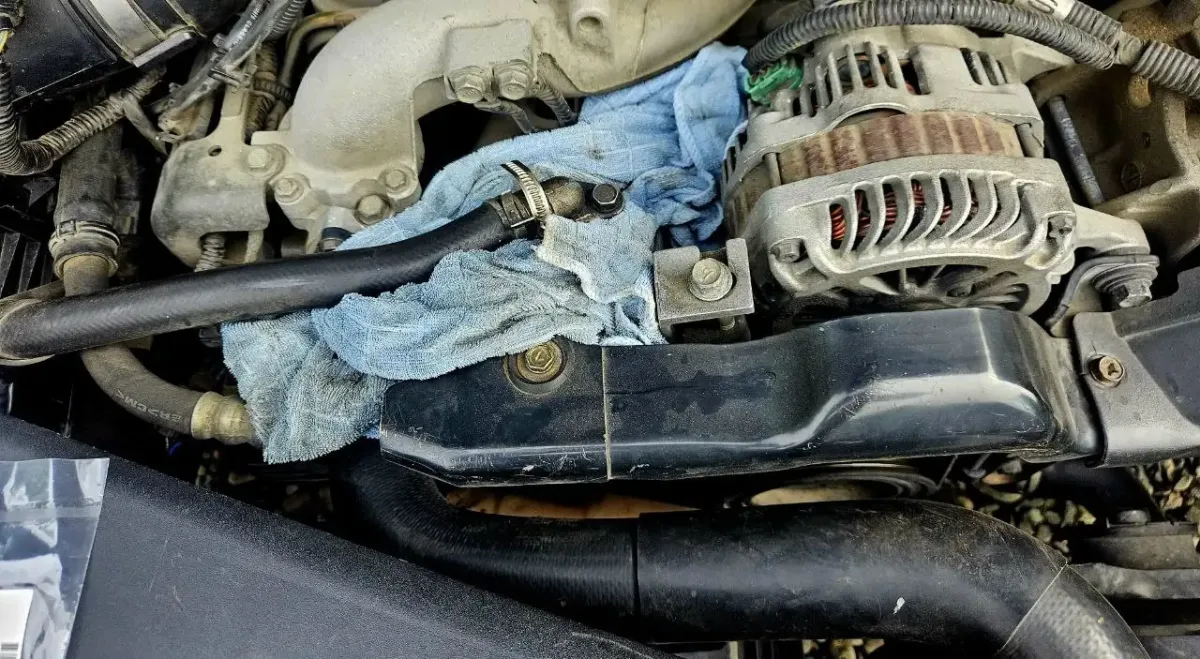
The process is quite simple but before we directly move to the job I advise you to wrap some cloth rag around the connection place, such that you will use it single-use, the thing is that when removing a small amount of hydraulic oil will spill and so as not to dirty the engine it is necessary that we lay down a cloth. This connection place is fastened by only 1, 12 millimeter bolt, and after removing it we just pull out the hose. After pulling it out we will clean the connection place we will remove the old O-ring and put on the new quality part purchased by us, it should be taken into account that the old O-ring might no longer be on the tip, at this time you must be careful look into the pump side female connector, its remnants might be in the oil, carefully take it out and try not to let it drop directly into the pump because this might cause subsequent problems and jamming of the pump, and after cleaning the surface and connection place we will connect the new O-ring and insert it into its place, if during insertion it doesn't sit without extra effort then something is obstructing it, don't apply force when putting it on properly clean those places where the hose directly sits, and after sitting it in tighten the 12 millimeter bolt, right here I will add that do not try to seat the hose directly with the bolt, it should already be fixed in place and the bolt should simply hold it.
Adding Fluid and Bleeding the System
So the replacement process is finished, but we must add oil for the oil spilled during replacement of course with new oil, let's clean the engine if there is any remnant of old oil anywhere, this is important because oil must not get on the engine's timing belt in any way and also on the outer belt too, but the timing belt is critical, and after cleaning we will add oil, we will take off the cap on the oil adding reservoir, in my case I use Valvoline ATF oil which is also the transmission oil in these models, when selecting definitely choose the oil correctly and take into account the manufacturer's requirements. After adding oil we start the car, and we do not close the cap on the reservoir, sit in the car and start turning the steering wheel left to the end and then right to the end, this is necessary so that a load is given to the system and it expels the air from the system which will be expelled from the reservoir, repeat the steering movements about 5 times to the left and 5 times to the right and then you can close the reservoir, that's it in just about 20-30 minutes this process is finished and most importantly you will notice the difference in work, on these engines this problem is quite relevant and its timely resolution even more important, just like the cooling system which has specific requirements, a post about changing the coolant you can see here.