
A car becomes an integral part of our lives from the moment we get our driver's license and begin the process of choosing our first vehicle. This process seems to create a deep attachment, and we accept the car as a member of our family. We try to choose it carefully, paying attention to the visual appeal, design, functionality, car type, and more. Some people prefer SUVs the most, while others lean towards sedans, coupes, or even convertibles. This diversity provided by automakers gives us the opportunity to tailor a specific car exactly to our tastes.
Of course, when we buy a brand new car, the selection process is much simpler and more pleasant. We don't have to spend hours, or sometimes even days, test-driving the car just to find out if it is genuinely in good working order. A test drive for a new car is simply to understand its handling and comfort, and to see if what the car offers aligns with our needs. We don't even worry about technical issues because it is protected by a warranty.
The Underrated Gem: Subaru Legacy BL5
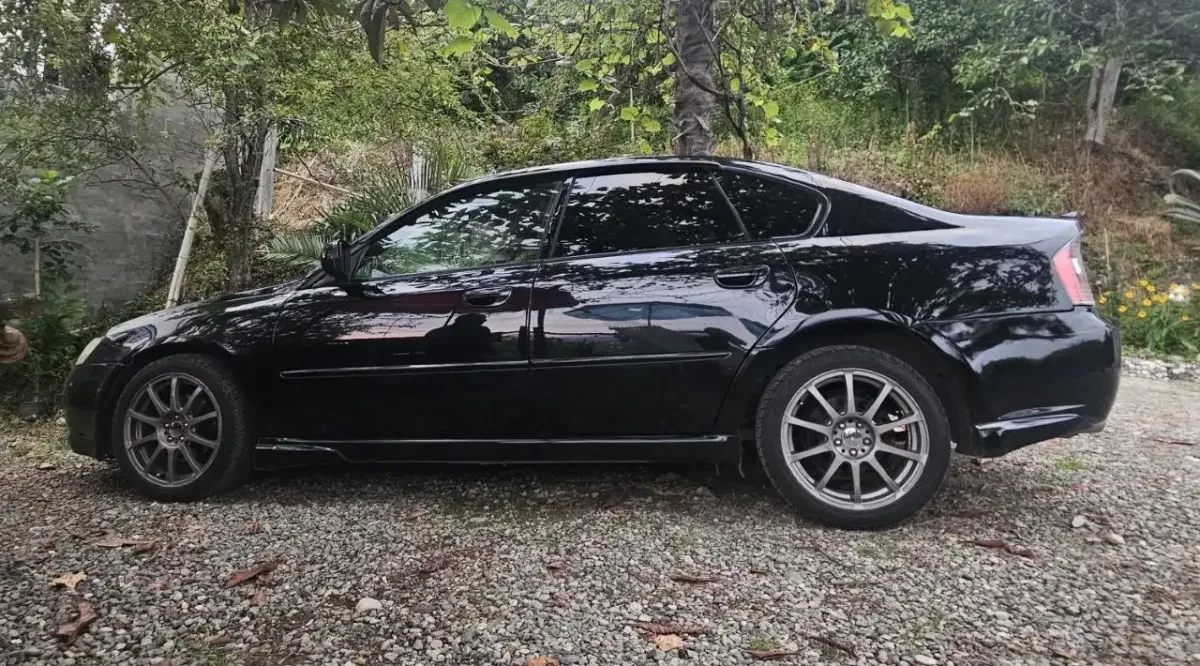
Today, however, we won't be talking about brand new cars. We will be discussing used cars, which are highly popular, and specifically one representative from Subaru. In my opinion, it has been a truly underrated car since the years of its release: the Subaru Legacy BL5.
Subaru began producing this model in 2003 and continued until 2009. Its design became one of the main attractive factors when purchasing this car. Its aggressive yet sporty visual reminds us of Subaru's true history and the roots of its success. I have owned this car for almost 5 years, and I want to share my experience and views about it. We will discuss both its positive and negative sides and provide information on even the smallest details.
Exterior Design and Visual Appeal
First, let's start with the exterior, since we had already touched upon it. This specific Legacy chassis from 2003 to 2006 is the pre-facelift model. It can be easily distinguished by the shapes of the front and rear headlights. On the fender side, these headlights have a somewhat squarish shape, unlike the facelift version, which was more refined and took on a pointed shape. The taillights were also changed, becoming slightly smaller in the facelift.
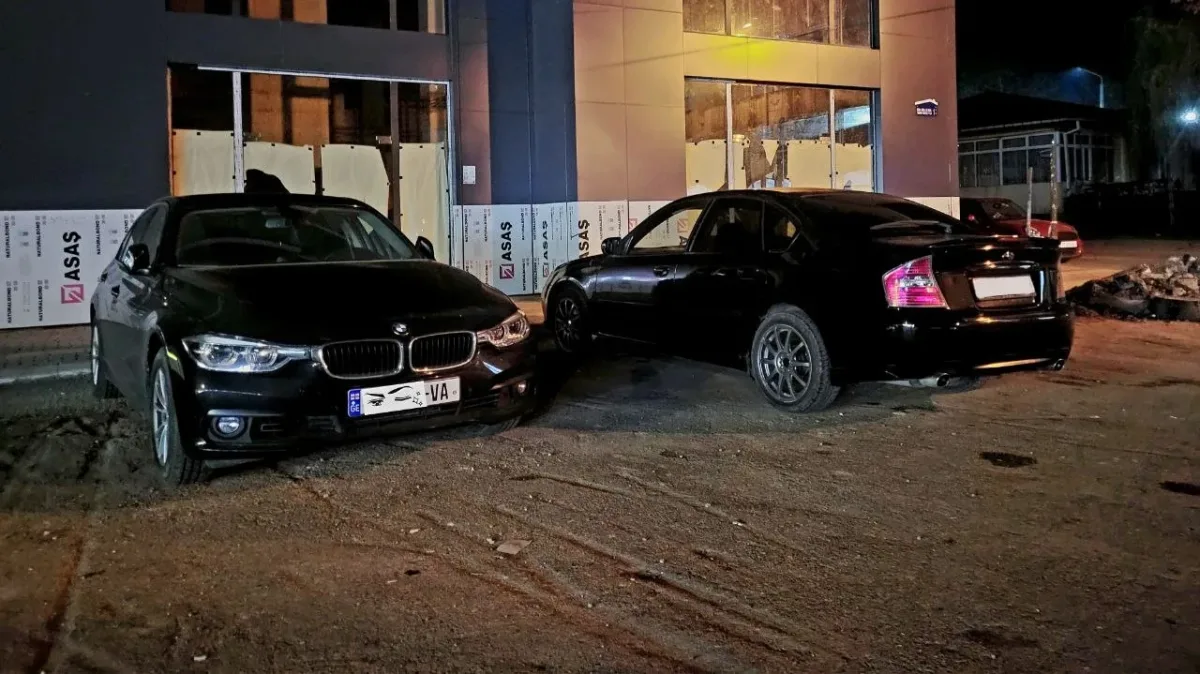
To compare the two, I want to say that it is entirely a matter of taste which one fits your preferences better. However, since the facelift version is newer, choosing it is definitely worth it. Details in the cabin and on the exterior were upgraded as well.
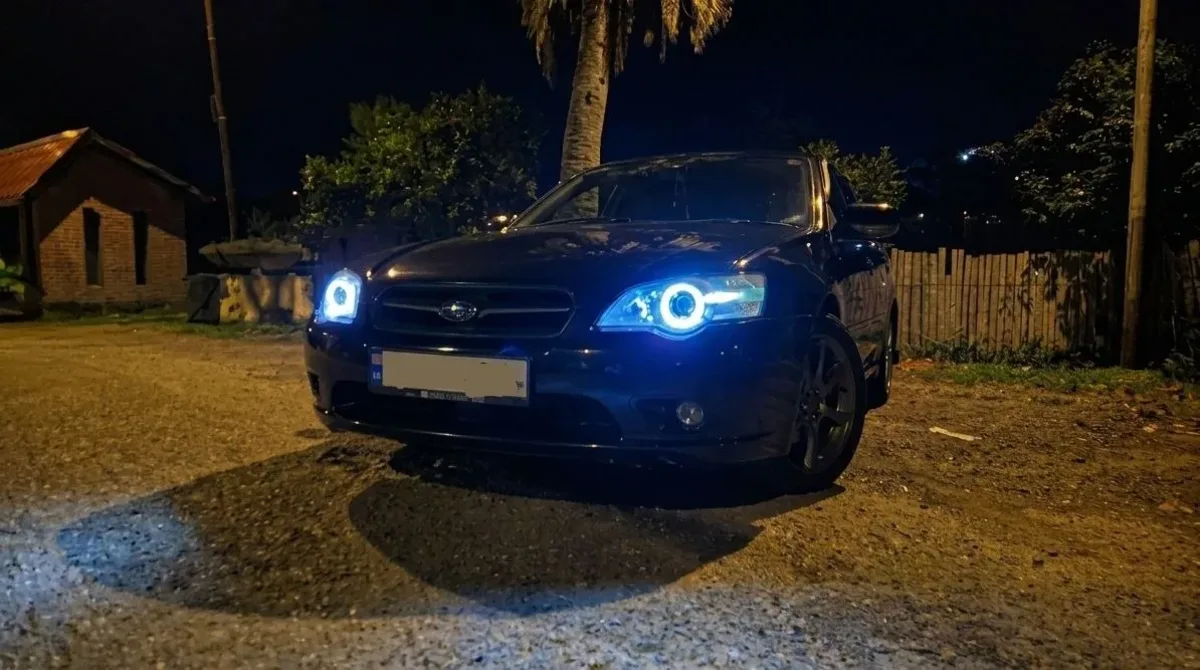
A rear trunk spoiler suits these cars very well. Because this model is a true JDM representative, you will find several types and heights of spoilers for it that look fantastic. But not having one certainly doesn't make the car look bad, because the rear visual is quite brutal and beautiful for many just the way it is. At the front, an excellent decision would be to install round DRL (angel eyes) lights in the headlights, as this rejuvenates the car and makes it more attractive, though this is definitely subjective. By the way, there is already an article on our site about the installation of angel eyes; you can see it here.
Wheels and Ride Quality
These cars come from the factory with 16, 17, or 18-inch wheels of various designs. Although I personally think the 18-inch visual is the most beautiful, due to its size, the car becomes much stiffer, which many people really do not like. In my specific case, it came with 16-inch wheels, which I later replaced with 17-inch Euromagic wheels.
Why 17-inch? Unlike the 16s, the 17-inch wheel is exactly the ideal, optimal size that fully completes this model visually while not stripping away important comfort elements. It is a "universal soldier" for your car. I will leave the rest of the visual details to subjective taste and won't dwell on them much further.
Interior Comfort and Features
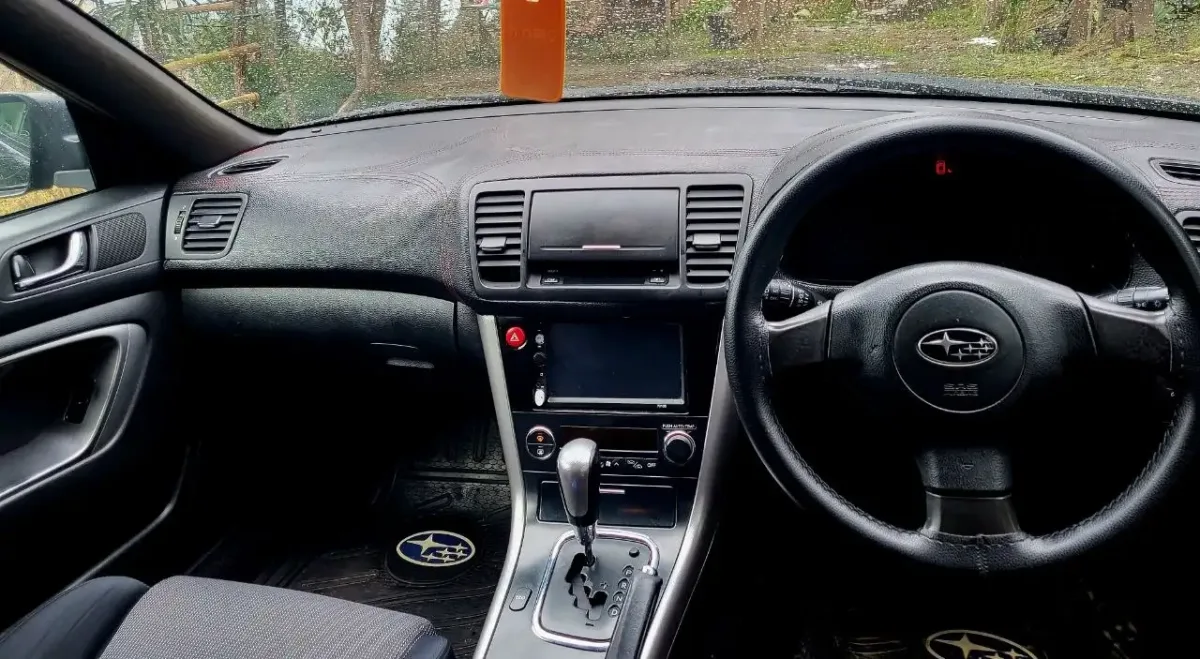
Let's move on to the interior. At first glance, you can tell that this is not a standard design characteristic of a typical JDM car. It features a cabin with a low seating position tailored more for comfort, reminding us of a sports car. Its seats with raised bolsters provide a snug fit, while the driver and passenger areas, separated by the center console, offer enhanced comfort and pleasant sensations while driving.
We find steering wheels both with and without buttons, and the dashboard and door panels are made of a distinct rubberized material. This is much more comfortable and pleasant, leaving the impression of a more expensive car compared to simple plastic. The combination of all these elements makes this car outstanding and somewhat underrated; if we compare it to a Forester or Impreza from the same years, many people will recognize that the better interior is found precisely in the Legacy.
This car was produced in both station wagon and sedan versions, which gives us the opportunity to choose the variant that best suits our lifestyle. Of course, there is much more space in the wagon if you decide to transport bulkier items.
Engine Options and Reliability
My personal Legacy is a JDM version. Unlike the American version, it has a different engine, and visually the exterior and interior differ in minor details, though both versions are fundamentally beautiful cars.
In the JDM lineup, we find:
2.0 SOHC engine (Approx. 135-140 hp)
2.0R DOHC engine (Approx. 165-180 hp)
2.0 DOHC Turbo engine (Approx. 270-280 hp)
3.0 engine (Approx. 250 hp)
Depending on your taste, these cars offer vastly different performance metrics, giving each its own unique character. In my case, I will talk about the most simply built and durability-oriented version: the 2.0i SOHC.
This is true Japanese durability in a Subaru. It is one of the best engines in the SOHC variant, though the DOHC and 3.0 versions are also excellent. The EJ and EZ series are the best releases of this generation. The Turbo version requires its own strict, characteristic maintenance and will definitely not forgive negligent interventions.
Over these 4 years, this SOHC engine has basically required timely timing belt replacements and basic fluid control; otherwise, it will not cause you any problems. The air conditioning system is sound and trouble-free. The cooling system requires a little more attention and definitely the selection of proper fluids. This Legacy model has quite narrow channels in the radiator, and incorrect fluids will inevitably cause it to clog. By the way, there is already an article on our site about changing the antifreeze; you can see it here.
Fuel Economy and Transmission
Legacy prices today have truly reached a threshold where it is worth considering buying one. The fuel consumption is admittedly on the higher side—about 8 to 12 liters with normal driving. If you demand high performance from it, the consumption will naturally increase.
This is caused not only by the all-wheel-drive system (which is an outstanding feature of Subaru) but also because in these years, Subaru used 4- or 5-speed automatic, or 5-speed manual transmissions. This specific car has a 4-speed automatic transmission, which also contributes to its lack of fuel economy. Despite this, the transmission is amazingly durable and problem-free; it will rarely cause you issues. Back in the early 2000s, 4-speed automatic transmissions were still a common sight in Japanese vehicles. We’ve already published a review on our site covering one such compact hatchback featuring the same transmission—you can check out the full article here.
Conclusion
Overall, we can say that this car is a traditionally durable and reliable Japanese vehicle with a 4-wheel-drive system and highly pleasant handling. After purchasing it, you will often find yourself thinking that you won't ever want to sell it, because you will become amazingly attached to its style and character.