
At some point in our lives, almost every driver has thought about purchasing a car that hits the ultimate sweet spot: exceptional fuel efficiency, surprising interior space, and a stress-free, comfortable daily driving experience. Today, finding a vehicle that fits this description seems easier than ever. The rapid evolution of hybrid technology and fully electric powertrains has flooded the market with hyper-efficient cars. Thanks to these modern engineering marvels, trips to the gas station have become increasingly rare—or, for EV owners, completely obsolete.
However, the automotive landscape looked vastly different back in the early 2000s. At the turn of the millennium, hybrid technology was still in its infancy, pricey, and far from mainstream adoption. To deliver affordable efficiency to the masses, car manufacturers had to rely on clever mechanical minimalism. Their strategy was straightforward: build lightweight, compact, front-wheel-drive hatchbacks with small, simple engines. The objective was crystal clear—deliver maximum practical usability and low running costs at an accessible price point.
Due to their tiny footprints, these hatchbacks excelled in congested urban environments. They were effortlessly maneuverable, simple to park in tight city spaces, and remarkably roomier on the inside than their exterior dimensions suggested. Even today, in 2026, these budget-friendly subcompacts remain incredibly relevant. For many first-time car buyers, students, or city dwellers, an inexpensive and mechanically simple vehicle is precisely what they are searching for.
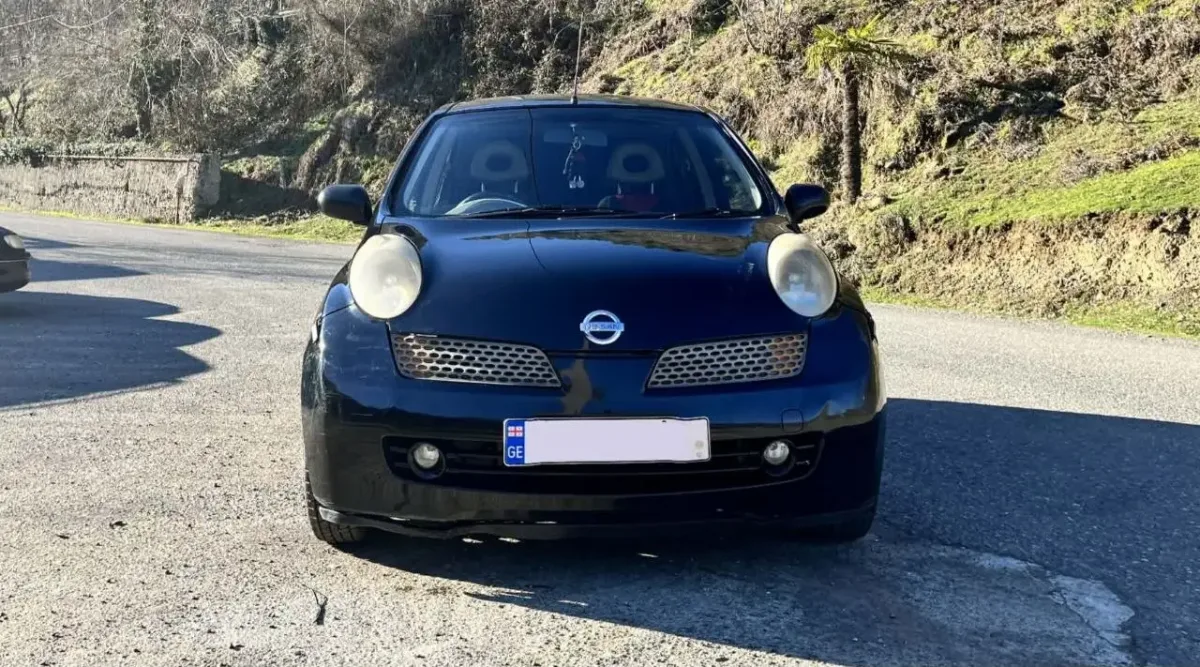
In this article, we take an in-depth look at one of Nissan’s most famous compact creations from the early 2000s: the Nissan Micra, a household name in Europe, which was sold in Japan under the Nissan March moniker. Specifically, this review focuses on the Japanese-market Nissan March (K12 generation).
Exterior, Interior, and Design Realities
Visually, the Nissan March K12 stands out with its distinctively rounded, bubbly aesthetic. Its soft curves, arching roofline, and prominent bug-eyed headlights give it a friendly, almost playful personality. This charming styling often appeals strongly to female drivers, though its retro-inspired look has universal appeal. The front fascia, anchored by those twin oval headlight pods, naturally evokes memories of the legendary original Volkswagen Beetle—the iconic "Bug" that captured hearts worldwide throughout the 20th century.

Like the classic Beetle, the March was designed around an ethos of structural simplicity and effortless daily operation. Depending on the trim level, Nissan offered subtle exterior and functional upgrades. Higher-tier packages featured integrated front fog lights, color-matched trim, and even keyless entry—a surprisingly luxury feature for an entry-level hatchback of that era. Whether you love or dislike the rounded design ultimately comes down to personal taste, but there is no denying that it possesses a unique personality that sets it apart from bland modern boxes.
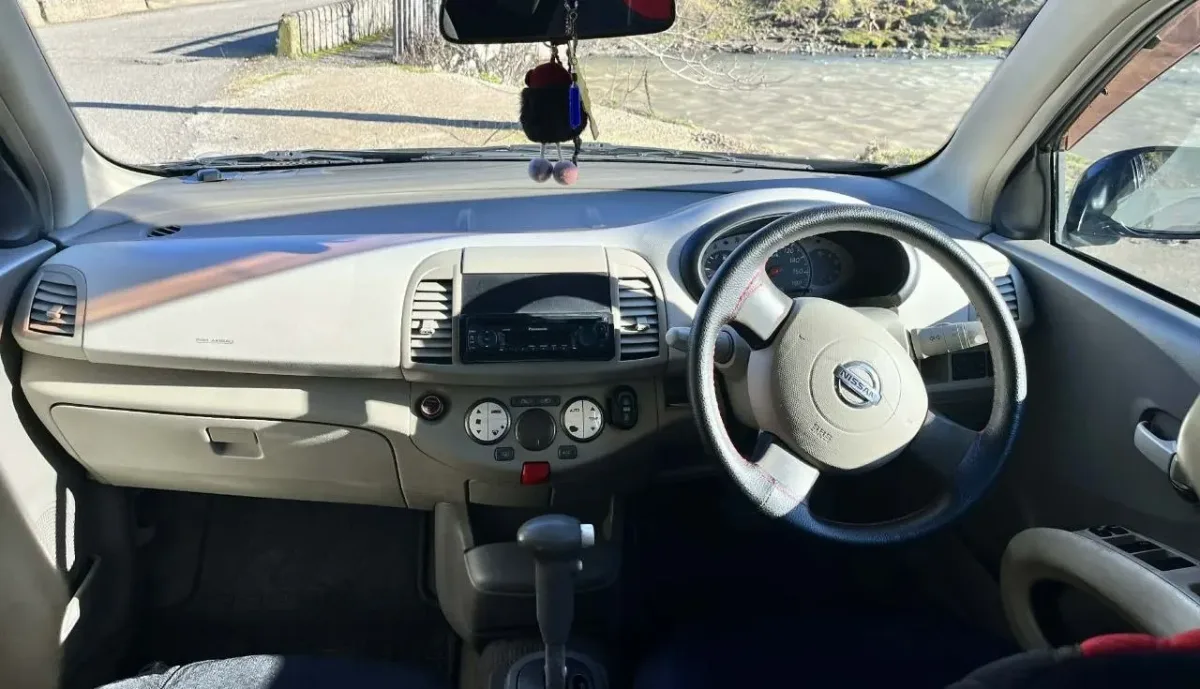
Steering inside, the interior embraces a philosophy of strict minimalism. The dashboard structure is clean and functional, consisting of a straightforward instrument cluster, simple climate control dials, and a traditional gear selector. However, the budget-oriented nature of the car becomes immediately apparent when you sit down. The seats are upholstered in basic, inexpensive fabrics and lack substantial ergonomic support, making long-distance highway journeys noticeably uncomfortable.
On a positive note, the steering wheel design is a genuine highlight: a simple, clean 3-spoke wheel that feels surprisingly natural and comfortable in your hands. Naturally, it would be unfair to judge a 2000s budget hatchback by 2026 technological and comfort standards. When evaluated in its proper context—and considering that these vehicles can be purchased today for absolute pennies—the interior delivers exactly what it promises: basic, functional transportation.
Engine Lineup and Transmission Variants
Historically, both the March and Micra established their reputations on being affordable, practical, and fuel-frugal urban commuters. In the K12 generation, Nissan attempted to maintain this legacy by offering a wide variety of four-cylinder engine options. Depending on the market, buyers could choose between 1.0L, 1.2L, 1.4L, 1.5L, and 1.6L engine displacements. Among these, the 1.2-liter and 1.4-liter gasoline engines emerged as the most popular and widely produced variants.
In European markets, where manual driving remained the standard preference, the Micra was overwhelmingly paired with a 5-speed manual transmission. When an automatic option was selected, Nissan fitted a traditional 4-speed torque-converter automatic transmission. The specific model featured in this review is powered by the popular 1.4-liter engine paired with that very 4-speed automatic transmission.
Fuel Economy: Expectation vs. Harsh Reality
On paper, a lightweight hatchback with a small 1.4-liter displacement engine sounds like the ideal recipe for stellar fuel efficiency. But is achieving low fuel consumption really that simple with the K12 March? The short answer is yes and no.
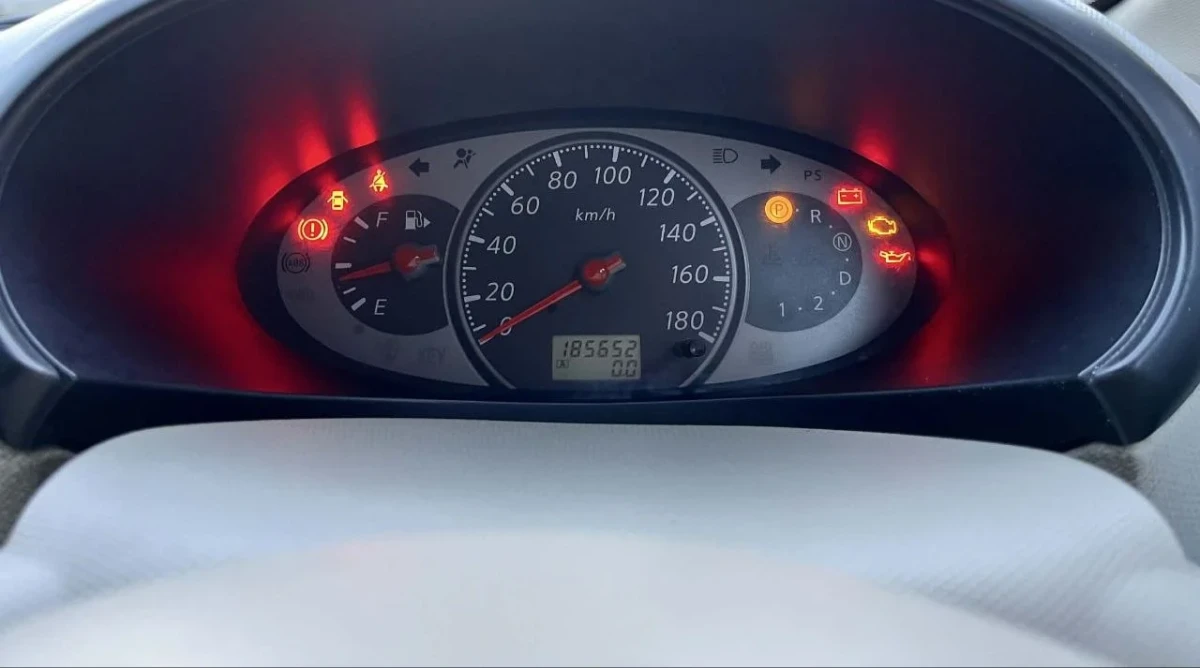
The primary flaw in the March's economic equation lies directly in its transmission. When paired with the old-school 4-speed automatic gearbox, the real-world fuel consumption is unexpectedly high. While exact figures vary depending on driving style and traffic conditions, let’s consider a realistic daily driving scenario consisting of urban stop-and-go traffic, minor uphill climbs, and brief highway stints. Under these everyday conditions, the 1.4-liter 4-speed automatic March routinely consumes around 10 liters of fuel per 100 kilometers (approx. 23.5 MPG).
For a car of this minuscule size and weight, a 10L/100km fuel consumption rate is undoubtedly disappointing. It completely undermines the core reason most people buy a subcompact car in the first place.
The root cause of this inefficiency is the gear ratios of the 4-speed automatic transmission. With only four forward gears, the engine is forced to rev higher at cruising speeds, while the fluid slippage inherent in older torque converters continuously saps engine output. In contrast, European-market Micras equipped with the 5-speed manual transmission tell a completely different story. The manual gearbox allows drivers to keep engine RPMs low, making the Micra genuinely economical and fully validating its lightweight design.
The Japanese March Dilemma and the Post-2005 CVT Solution
For Japanese-market Nissan March models, the fuel economy situation was initially quite frustrating. Early K12 models (2002–2005) exported or imported with the standard 4-speed automatic failed to deliver the low fuel bills buyers anticipated. Purchasing a tiny hatchback that consumes as much fuel as a mid-size sedan largely defeats the purpose of owning a small city car.
Fortunately, Nissan recognized this shortcoming during the mid-cycle refresh. In 2005, when Nissan introduced the facelifted K12 March, they phased out the outdated 4-speed automatic in favor of an advanced Xtronic CVT (Continuously Variable Transmission), particularly on the newer 1.5-liter HR15DE engine models. The CVT enabled the engine to operate continuously within its optimal power and efficiency band, drastically improving fuel economy and restoring the vehicle's reputation as a frugal urban runabout.
Final Verdict: Is the Nissan March Worth Buying?
The Nissan March and Micra K12 remain beloved budget vehicles for thousands of drivers around the world. Its distinct styling, mechanical simplicity, and low entry price make it an appealing choice on the used market. However, if you are planning to buy one today, your transmission choice will make or break your ownership experience.
If low fuel consumption and maximum practicality are your primary goals, you should strongly prioritize finding a manual transmission model. A manual Micra or March delivers the true efficiency you expect from a subcompact car. Finding a manual version is significantly easier if you browse European-market listings.
Conversely, if you come across a pre-facelift Nissan March fitted with the 4-speed automatic transmission, we strongly recommend considering other options—even if it means spending a little extra money upfront for a newer or different vehicle. The money you save on the initial purchase price of a 4-speed automatic will quickly be swallowed up at the gas pump.
Of course, if rock-bottom fuel economy isn't your absolute top priority and you prefer a roomier, more powerful, and sophisticated machine, expanding your search to larger Japanese vehicles is a smart move. In fact, if you're interested in exploring higher-tier JDM classics, check out our comprehensive review of one of Japan’s most stunning sedans, the fourth-generation Subaru Legacy, right here on our blog!